All proofs rest on premises. — Aristotle
Dig down and then start from the ground up.

Many of our most important ideas are assumptions we take for granted and never question. If we identify and analyze those assumptions, we can better understand what we think and why.
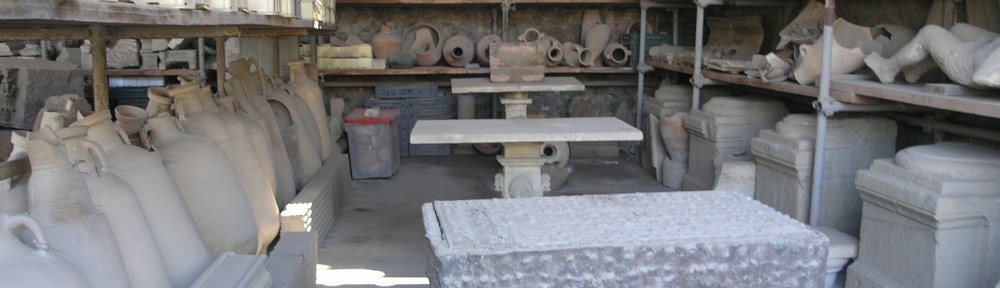
Discovering our own hidden assumptions is like deep cleaning our homes: scouring those out-of-the-way spots we tend to ignore, thinning out the clutter we’ve grown accustomed to, and tending to other imperfections we no longer notice. It’s also a bit like archaeology: digging down through layers of time and civilization to find the building blocks of thought.
The process of unpacking assumptions is essentially a specialized form of critical thinking, but with a special emphasis on drilling down to the fundamental premises upon which an idea rests. So try the tips we recommend for critical thinking, especially a SEKAR analysis. And sometimes the best tool is to ask “why?” — repeatedly — when trying to understand what lies beneath an assumption.
Below are two examples from people who disagree about the national health care debate. Leslie generally likes Obamacare, and Alex does not.
First, an analysis of Leslie’s thinking and assumptions:
- Using a SEKAR analysis, we learn that the source of Leslie’s opinion of Obamacare comes from the long national debate about health care — dating back more than 20 years. In his view, the evidence for the wisdom of Obamacare comes from many experts and think tanks, the Massachusetts experiment with a similar program (sometimes called “Romneycare”), and the last few years’ national experience that greatly expanded the number of Americans with health insurance. Leslie quite knowingly adopted his opinion of Obamacare, although his parents always spoke about health care as a human right when he was growing up, and he adopted that belief without ever questioning it. Many assumptions underlie his support of Obamacare (see below). He has not seriously reconsidered his view of the program since it first started, but he wishes that there were a “public option” insurer and that insurance premiums were less expensive.
- Some of the assumptions underlying Leslie’s thinking are: (a) everyone should have health insurance; (b) devising a health insurance system like Obamacare is extremely complicated; (c) for the system to work, healthy people need to buy health insurance; and (d) until health care costs come down or the incentives for individuals change, insurance is going to be expensive for everyone.
- If asked, “why do you have these assumptions?”, Leslie would respond: (a) health care is a human right that should not depend upon a person’s wealth; (b) the health care system involves complex interactions between individuals, doctors, hospitals, insurance companies, government regulators, and pharmaceutical companies; (c) over the long run, the cost sharing between healthy and unhealthy people (and between the young and the old) will come out fairly; and (d) there is little marketplace pressure holding down health care expenses.
- And digging down one layer further underneath the assumptions above, Leslie would further explain: (a) poor people should receive medical care even if they can’t afford it, and the government should step in to protect them; (b) unless we are willing to socialize medicine (which Leslie opposes), most of the participants in the health care system will be motivated by profit and many of their interests are in tension with each other; (c) it’s fair to make healthy people subsidize the health care costs of unhealthy people, in part because everyone will someday get sick and die; (d) the government exerts only limited pressure to hold down health care costs, and most individuals do nothing to contain costs — largely because their co-payments are not significantly correlated with the actual costs of treatment and because individuals rarely shop around for the lowest price on expensive medical treatment.
- These explanations beg the “Why?” question. Why should health care be viewed as a human right? Why should some taxpayers have to pay for other people’s insurance? Why should healthy people be forced to subsidize the costs of unhealthy people who don’t take care of themselves? Why don’t consumers of health care and the government do more to force down the cost of medical treatment? Why shouldn’t we socialize medicine? Why does Leslie think Obamacare is a success if millions of people still lack insurance and premiums are high?
In contrast, here’s an analysis of Alex’s thinking and assumptions:
- The source of Alex’s opinion of Obamacare also comes from the long national debate about health care. In her view, the evidence about Obamacare’s problems comes from many experts, the last few years’ national (and unsuccessful) experiment with an inadequate health care market, and the program’s violation of basic economic principles. Alex quite knowingly adopted her opinion of Obamacare, although some of her underlying objections to the program can be traced back to the way she was raised. Many assumptions underlie her opposition to Obamacare (see below). She has not seriously reconsidered her view of the program since it first started, except that she believes the way the program has worked in practice confirms her original skepticism about its merits.
- Some of the assumptions underlying Alex’s thinking are: (a) if some people can’t afford health care, other taxpayers shouldn’t have to subsidize them; (b) Obamacare is too complicated and infringes on people’s freedom — no one should be forced to buy health insurance and insurance companies should be allowed to offer bare bones plans that cost less; (c) healthy people shouldn’t be forced to pay the same amount for insurance as unhealthy people; and (d) individual consumers should have more “skin in the game”— especially higher co-payments — so that they’ll put pressure on health care providers to lower costs.
- If asked, “why do you have these assumptions?”, Alex would respond: (a) health care is a modern luxury, not a human right, and we simply can’t afford to pay for everyone to have the “best” care; (b) our health care system should be driven by market forces, like any other product, and my freedom to choose should not be infringed by the government; (c) it’s not fair to make young and healthy people subsidize older and unhealthy people; and (d) we need more, not less, marketplace pressure to hold down health care expenses, and the government should not be picking winners and losers.
- And digging down one layer further underneath the assumptions above, Alex would further explain: (a) it’s not the government’s role to create “human rights”; (b) individuals need to take responsibility for their own lives, and if they want health insurance they need to find a job that provides it or work hard enough to buy it themselves; (c) healthy people who take care of themselves shouldn’t be forced to subsidize those who do not, and if young people want to save money and decline to buy health insurance, they should be able to do so without facing a government penalty; (d) there’s nothing wrong with doctors and hospitals trying to profit from their work, and the government shouldn’t mandate insurance companies to provide any particular medical services in their policies.
- These explanations beg the “Why?” question. Why does Alex think the government is creating a human right? Why does she think everyone has the opportunity to earn enough money to pay for health insurance? Why shouldn’t we look at the entire lifespan of health care needs when deciding whether it’s “fair” to put everyone into the same risk pool? Isn’t it part of the government’s role to help those who can’t help themselves? In many places, there’s little competition among doctors and hospitals, so why shouldn’t the government step in to prevent abuses of virtual monopoly power among health care providers?
By drilling down to some of Alex’s and Leslie’s underlying premises, we can begin to see where they might share some “lowest common assumptions” and where, in contrast, their views may seem to be irreconcilable.
Click here for some additional examples of unpacking assumptions.
 Prime Thinking